The Journey of Music That Never Ends.
The Journey of Music That Never Ends.
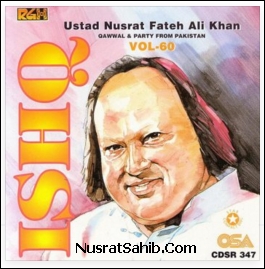
Ae Athra Ishq Nahi Saun Denda
Ishq Vol.60 & 94
Punjabi-Qawwali
Nusrat Fateh Ali Khan
Downloads : 360 times
The Art of Papercraft: Unique One-Sheet Projects Using Origami, Weaving, Quilling, Pop-Up, and Other Inventive Techniques
In a world increasingly dominated by digital screens, there is something profoundly grounding about the tactile nature of paper. Whether it’s the crisp snap of a fresh fold or the intricate detail of a hand-cut silhouette, paper crafting is more than just a hobby—it’s a gateway to mindfulness and a versatile medium for artistic expression. This post serves as your comprehensive guide to the essential "Paper Craft Book," exploring the techniques, tools, and transformative power of this timeless art form. 1. The Magic of the Medium: Why Paper?
The art of precision. Traditional origami uses no glue or cuts, while contemporary "Creative Origami" pushes these boundaries to create everything from geometric sculptures to life-like animals.
Techniques that focus on building layers or using paper to embellish existing objects, turning a simple box into a piece of art. 3. The Crafter's Toolkit: What You Need
Paper is perhaps the most accessible art material in existence. From humble beginnings in China around 105 CE, paper crafting has evolved into diverse global traditions like Japanese , French Decoupage , and German Scherenschnitte . What makes it unique is its ability to transition from a flat, two-dimensional sheet into a complex three-dimensional object using only simple actions: cutting, folding, and gluing. 2. Essential Techniques from Top Manuals
Modern paper craft books often categorize projects by technique. If you were to open a definitive guide like The Art of Papercraft by Helen Hiebert , you would find a treasure trove of methods:
Also known as paper filigree, this involves rolling and shaping thin strips of paper to create delicate, 3D designs often seen on greeting cards and jewelry.
Using a "drawing with a knife" approach, artists like Jessica Palmer demonstrate how to use positive and negative space to create intricate landscapes and portraits.